


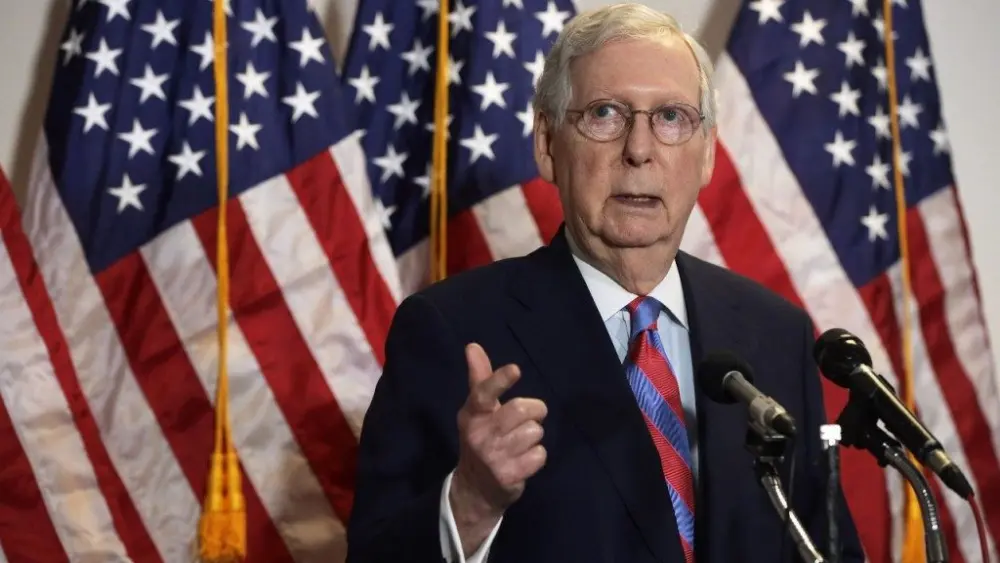
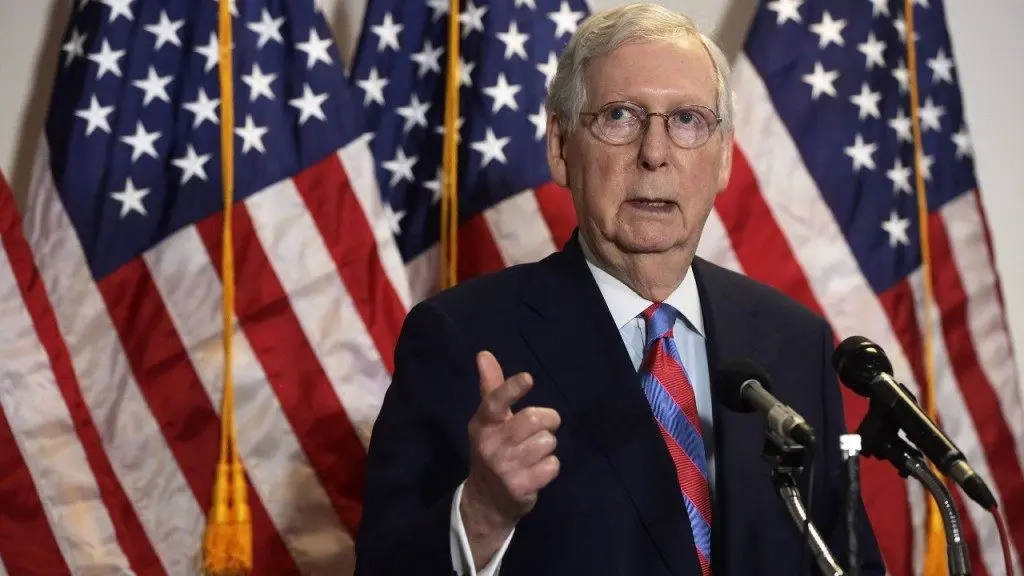
WASHINGTON, D.C. – U.S. Senator Mitch McConnell (R-KY) delivered the following remarks on the Senate floor ahead of the roll call vote related to S.J.Res.104, Kaine War Powers Resolution (Iran):
Later today, the Senate will consider a resolution from Senator Kaine. The purpose, as our colleague puts it, is to prevent the nation from sending our young people to die in war without legitimate justification.
I do not doubt the sincerity of our colleague’s intentions. Like Kentucky, Virginia is a state with a large military footprint. And the magnitude of the risks undertaken by brave people we represent is inescapable.
But I would submit to each of our colleagues a few reminders as this debate unfolds:
First, this weekend’s events are not the beginning of a war, but an attempt to end one that has spanned nearly half a century. The Islamic Republic of Iran was, quite literally, founded on the premise of existential war against America and Israel. And over and over again, it has escalated this war. Exported more terror. Spilled more blood. And destabilized an entire region.
This war belongs to the mullahs in Tehran. And, as I’ve explained so many times over the years, the powers of the President for the use of military force – with or without prior Congressional approval – are well-established.
Every single President during my time in the Senate has invoked these inherent authorities, from President Reagan’s strikes on Libya to President Biden’s strikes on the Houthis. President Trump’s use of force to end Iran’s war of terror is squarely within his inherent authorities as Commander-in-Chief. So I will oppose the Kaine resolution and would recommend that our colleagues do the same.
Now, with that said: A President’s clear authority to use military force does not absolve him from a responsibility to place his national security decisions on the broadest possible political foundation. In fact, precisely because Presidents hold such expansive constitutional authority, it is incumbent on them to ensure such use is judicious, rooted in core national interests, and broadly supported by the American people.
For decades following World War II, Presidents of both parties tended to take this responsibility seriously. They understood that wild swings in foreign policy between Administrations could confuse our allies and embolden our adversaries. And so, throughout the Cold War, they spent considerable time and political capital explaining to the American people the stakes, objectives, and strategies they intended to pursue in service of our national security.
When it came to Iran policy, President Obama did not take this responsibly to heart, and it is little surprise that his unilateral deal did not survive for long after his Presidency. Likewise, despite my urging, President Biden failed to speak clearly to the American people about our national interest in helping Ukraine resist aggression.
President Trump has made a bold and tough decision – one that could transform the region for the better for generations to come. But there are risks involved. And I hope his Administration will work to explain the connection between the Commander-in-Chief’s worthy objectives and the military and diplomatic means to achieve them. Connecting ends and means is the essence of strategy, and it’s important for the Administration to explain to the American people how they intend to do so.
In turn, our colleagues in the minority have a responsibility to listen, and not to reflexively oppose foreign policy decisions of Presidents they don’t like. After all, we don’t have to look far into the past to find Senate Democrats voicing support for keeping the military option on the table in America’s dealings with Iran… Or supporting President Biden’s unilateral military force against Iran’s proxies in the absence of explicit Congressional authorization.
More immediately, I hope our colleagues will consider the consequences of terminating ongoing operations before they have succeeded. What would the Chinese or the Russians conclude if America abruptly lost its stomach for decisive action? What cold comfort would our allies take from an increasingly erratic and partisan application of U.S. foreign policy commitments?
Mr. President, the consequences of successfully ending Iran’s decades-long war against America and our allies and partners would reach far beyond the Middle East. This is evident in the way Russian and Chinese officials quickly condemned U.S. and Israeli operations… and in their unwillingness – or inability – to come to Tehran’s aid in a meaningful way.
Two observations on this point:
First, one of the reasons U.S. operations have enjoyed such freedom of maneuver in the Western Hemisphere and the Middle East is that Russia is bogged down in its war in Ukraine… a war whose battlefield innovations are already shaping operations in the Gulf. If Russia was more unencumbered, it could have provided more material assistance to its partners in Venezuela and Iran. The price of peace in Ukraine matters, and we should be careful not to compel an outcome that allows Russia to reassert itself in regions of critical importance to the United States.
At the same time, there is tremendous value – globally – to destroying Iran’s ability to produce the drones that rain down death in Europe and the Middle East, alike. There is likewise value in disrupting its illicit oil trade with the PRC.
Finally, Mr. President, a word about munitions, military readiness, and defense industrial capacity. Regardless of disagreements on the pending question, every one of us should want the United States to have the best-possible military. Every one of us should want our armed forces to be prepared for even more challenging threats.
Today, the U.S. military is not prepared to confront aligned adversaries and deter or defeat aggression simultaneously on multiple fronts. The reasons are numerous, and there’s plenty of blame to go around. Administrations have failed to submit budget requests that meet the basic requirements of the military. Congress has failed to pass timely, full-year appropriations. Industry has failed to anticipate inevitable demand. And now, America faces Russia’s war against Ukraine and China’s determined military modernization with shallower magazines of critical munitions.
But the good news? With more funding, there’s spare production capacity to be tapped this year, in FY26. We can build more munitions, produce more spare parts for airplanes, repair ships, invest in dilapidated military infrastructure, and deepen our cooperation and co-production with allies. We shouldn’t wait another year to seize these opportunities. The way to realize the well-resourced military our nation requires for future conflicts is to build it today.
My colleagues have heard me invoke the wartime words of the late Admiral Harold Stark. But his warning bears repeating: “Dollars cannot buy yesterday.”