



December 18, 2024
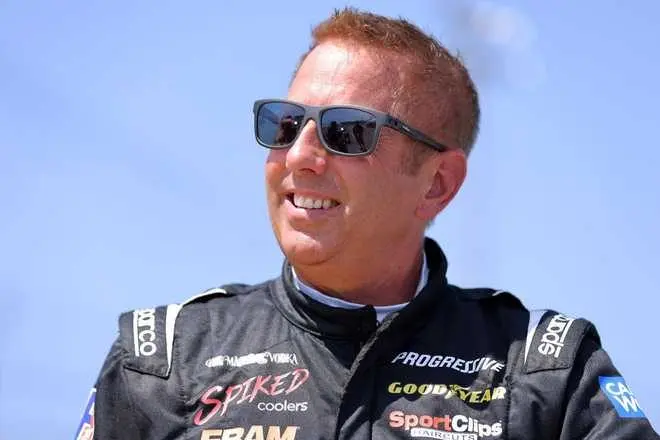
The news arrived like a gut punch to the racing world this morning. Greg Biffle—the fierce competitor who built his legacy one calculated lap at a time, the man known as “The Biff” to fans who watched him claw his way from short tracks to NASCAR’s elite—is gone. Seven souls lost in Statesville, North Carolina, including Biffle and his family, in a tragedy that adds another devastating chapter to a story NASCAR never wanted to write.
But write it they must.
The Biff: A Racer’s Racer
Greg Biffle never took the easy road. Born in Vancouver, Washington, he earned his stripes in the rugged world of Pacific Northwest racing before catching NASCAR’s attention. He wasn’t handed his career—he built it, truck by truck, lap by lap, winning championships in both the Truck Series and what is now the Xfinity Series before establishing himself as a formidable force in Cup Series competition.
Nineteen Cup victories. Fifty-six top-five finishes across NASCAR’s top three series. A runner-up finish in the 2005 Cup championship that still stings those who remember how close he came. But numbers only tell part of the story. Biffle was a wheelman in the truest sense—aggressive but calculated, fierce but fair, a driver who understood that racing was equal parts speed and strategy.
Off the track, he channeled that competitive drive into causes that mattered. Animal welfare advocacy became his passion, particularly for dogs—a softer side that surprised those who only knew him as the hard-charging competitor behind the wheel. It revealed the full measure of the man, someone who fought not just for checkered flags but for those who couldn’t fight for themselves.
A Hero in the Mountains
The cruel irony of today’s tragedy is almost too much to bear. Greg Biffle was a man who understood that having the means to help creates the obligation to help.
When Hurricane Helene devastated Western North Carolina in 2024, leaving mountain communities isolated by floods and mudslides, roads washed away and bridges collapsed, Biffle didn’t just write a check or say the right thing in sound bites. He climbed into his helicopter and flew into the heart of the disaster zone.
Day after day, he and his family made runs into areas rescue services couldn’t reach—remote hollows where elderly residents were stranded without food, water, or medical supplies. They hauled essentials to communities cut off from the world, landing in clearings and pastures, anywhere they could touch down safely to help people who had lost everything.
The people of Western North Carolina won’t forget those flights. While others debated relief efforts from comfortable distances, Biffle was there, using his resources and his skills to make a tangible difference. He understood something essential: that when people are suffering, you don’t wait for someone else to act—you act.
Those who met him during those relief missions described a man without pretense, working alongside volunteers, refusing special treatment, focused entirely on the mission. This wasn’t a photo opportunity or a publicity stunt. This was who Greg Biffle was when the cameras weren’t rolling—a humanitarian who saw need and filled it, asking nothing in return.
The mountains he saved are the mountains that now mourn him. Today’s Cessna Citation crash in Statesville has taken a champion, a humanitarian, a father, a husband—a man who proved that greatness isn’t measured only in trophies but in the lives you touch when no one’s keeping score.
A Cursed Connection
There’s something about speed that draws men and women to the sky as naturally as it draws them to the track. Perhaps it’s the freedom, the control, the ability to chart your own course above the traffic and the noise. Perhaps it’s simply that racers are wired differently, seeking velocity in whatever form they can find it.
But that connection between NASCAR and aviation has been written in sorrow too many times.
It began, in modern memory, with Alan Kulwicki on April 1, 1993—though no one who loved racing found any humor in that cruel date. The sport’s reigning champion, the independent owner-driver who proved you didn’t need a massive operation to win it all, was flying to Bristol when ice invaded the engines of his Swearingen Merlin III. Four lives ended in the Tennessee hills, and a fairytale story was cut short before the sequel could be written.
Just three months later—three months—Davey Allison brought his helicopter down at Talladega. The golden son of Alabama racing royalty, winner of nineteen Cup races, died from his injuries the following day. He was thirty-two years old. The racing world barely had time to catch its breath after losing Kulwicki before grief descended again.
The worst was yet to come.
October 24, 2004, remains a date seared into the consciousness of anyone connected to Hendrick Motorsports. A Beechcraft Super King Air carrying twelve people—family, friends, key personnel—flew into mountainous Virginia terrain shrouded in fog. John Hendrick, the president’s brother and team president. His twin daughters. Ricky Hendrick, the next generation of racing leadership. Benton, Kentucky’s own Scott Lathram, helicopter pilot for Tony Stewart. All gone. All at once. The NTSB would later cite pilot error in impossible conditions, but that clinical explanation does nothing to fill the void left by twelve lives extinguished.
The crashes kept coming. John Paul Kennedy in 2007, along with his pilot and three innocent people on the ground in Florida. Each tragedy unique, each one leaving families shattered and a sport asking why the price of speed must sometimes be paid in the sky as well as on the track.
The Lucky Ones
Not every aviation story in NASCAR ends in tragedy, though the survivors carry their own scars.
Jack Roush has cheated death twice from cockpits—first in 2002 when his experimental aircraft struck a power line in Alabama, then again in 2010 in Wisconsin. The man still wears an eye patch from those crashes, a permanent reminder that luck runs out by degrees.
Dale Earnhardt, Jr. walked away from a terrifying incident in 2019 when his Cessna Citation made a hard landing and skidded off the runway in Elizabethton, Tennessee, his family shaken but unharmed. Rick Hendrick’s Gulfstream lost its brakes in Key West, and somehow everyone walked away from that too.
These are the stories we tell ourselves when the phone rings with bad news—the times when fate blinked, when the angels were watching, when inches and seconds aligned in favor of life instead of death. They’re proof that tragedy isn’t inevitable, even as tragedy keeps arriving.
The grim coincidence is impossible to ignore: Dale Jr. and family survived a Citation accident. Today, a Citation took Greg Biffle and his family. The same aircraft type, different outcomes separated by years and circumstances we may never fully understand.
A Reckoning That Never Comes
The question hangs in the air after every crash: Will this finally be enough? Will NASCAR’s extended family finally reconsider their relationship with private aviation?
Most likely, no. The lifestyle demands it—races across the country, sponsor obligations, family time squeezed between commitments. Commercial flights don’t bend to racing schedules. Private aircraft do. Visit a race weekend at Talladega or Daytona or many other tracks around the country. There is an airstrip that is almost as busy as an international airport on Thanksgiving weekend moving drivers and crews into town and back home to North Carolina at the end of every race. And, if there’s not an airstrip within eyeshot of the track, a helicopter will be utilized to get the teams in and out of town.
And for people like Greg Biffle, aviation meant more than convenience. It meant the ability to help when help was needed most, to reach places others couldn’t, to be where you were needed when you were needed there. His helicopter flights into hurricane-ravaged communities weren’t about luxury or lifestyle—they were about service, about using every tool at your disposal to make a difference.
The Empty Garage
In the mountains of Western North Carolina, there are people alive today because Greg Biffle flew his helicopter into danger to help them. They’re preparing meals tonight, tucking children into bed, living lives that might have been lost without those relief flights. They’ll carry his memory differently than the racing world does—not as a champion driver, but as the man who came when they needed him most.
There are children who’ll grow up with photographs instead of memories, asking questions that have no good answers. There are friends scrolling through old text messages, listening to voicemails they never thought they’d need to save. There’s a community in shock, grieving collectively while carrying individual burdens of loss.
This is what aviation tragedies do to the NASCAR family—they take not just one person but entire networks of love and connection, leaving holes that can never quite be filled, no matter how many tribute laps are run or how many moments of silence are observed.
Racing Forward
The racing will continue because that’s what racing does. Next season will come, cars will take to the track, and new stories will be written. Life, even in mourning, pushes forward because stopping means letting the tragedy win.
But Greg Biffle’s legacy will remain—in the record books, in the memories of battles won and respect earned, in the dogs saved through his advocacy, in the mountain communities that will forever remember the helicopter bringing hope through the storm. In the lives he touched both inside and outside the sport, on the track and in the air, in victory and in service.
He was a champion when it mattered and a fighter until the end. He was a humanitarian who understood that privilege creates responsibility, that capability demands action, that having the skills and resources to help means you have the duty to help.
The sky is darker today for racing fans. Seven more stars have joined the constellation of those who left us too soon, their Cessna Citation meeting fate on an ordinary December morning that became anything but ordinary.
Rest in the arms of Jesus now, Biff and wife Cristina, their 5 year old son Ryder and his 14 year old daughter Emma. The racing world is lesser without you, but richer for having known you. The mountains remember. We all remember.
The racing community has not yet released details about memorial services. NASCAR has announced it will honor the victims at upcoming events.
Note: If you or someone you know is struggling with grief or loss, please reach out to mental health resources or speak with trusted friends and family. Tragedy touches us all differently, and there’s no weakness in seeking support.