
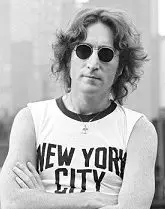
There’s a peculiar cruelty in the way we’ve preserved John Lennon. Frozen at forty, forever the martyr in round glasses, the prophet of peace cut down in his prime. We’ve built a monument from his absence, carved meaning from the silence that followed that December night in 1980. But what if there had been no gunshots outside the Dakota? What if Lennon had simply walked through those doors, climbed the stairs, and lived to see another morning?
To imagine John Lennon alive today—an 85-year-old man who might be making TikToks or arguing on Twitter, who might have embarrassing opinions about NFTs or have recorded a duet with Billie Eilish—feels almost sacrilegious. We’ve grown comfortable with the legend. The living man would be far more complicated.
The most radical possibility is also the most mundane: Lennon might have simply faded. Not every revolutionary stays revolutionary. Bob Dylan went electric, then went wherever Bob Dylan goes. Paul McCartney became a knight and wrote “Wonderful Christmastime.” The cultural landscape is littered with revolutionaries who became exactly what they once raged against, or worse, who became irrelevant.
Would Lennon have avoided this fate? His own history suggests ambivalence. The man who wrote “Imagine” also wrote “How Do You Sleep?” The peace activist was also capable of cruelty, of abandoning his first son, of ugly behavior toward women that he himself later acknowledged with regret. The Lennon we memorialize is the one who was growing, who seemed to be in the process of becoming something better when the bullets stopped that process cold.
Perhaps that’s the real tragedy—not just what we lost, but what he might have become. By 1980, Lennon had stepped away from music for five years to raise his son Sean. He was baking bread. He was, by all accounts, genuinely trying to be a better father than he’d been to Julian, a better partner than he’d been to Cynthia. This older, gentler Lennon might have continued that arc into genuine wisdom rather than rock star excess.
Imagine—if you’ll forgive the word—Lennon navigating the AIDS crisis, the fall of the Berlin Wall, 9/11, the Iraq War, British and US politics, the pandemic…Would he have evolved or calcified? Would his peace activism have deepened or curdled into the performative celebrity advocacy that characterizes so much of our current moment?
The music is another question entirely. Lennon’s last album, Double Fantasy, was good but not transcendent—the work of a man content with domestic life, finding poetry in the everyday rather than the cosmic. Some critics found it disappointingly small. Would he have been satisfied making pleasant records about love and family? Or would some event, some injustice, have lit that old fire again?
We might have gotten a Beatles reunion. McCartney has spent decades hoping for one, and in life, people forgive things that seem unforgivable in youth. Lennon and McCartney did speak in those final years, with warmth even. A nostalgic reunion tour in the 90s isn’t hard to imagine—four old men, billions richer, playing “Hey Jude” at stadiums while their children watched from backstage. Would it have been beautiful or sad? Both, probably. That’s what life is.
But perhaps the most interesting counterfactual is technological. Lennon was always an early adopter, fascinated by recording techniques and sonic possibilities. How would he have responded to sampling, to electronic music, to Auto-Tune, to Spotify, to AI-generated music? Would he have collaborated with Kanye or Kendrick? Would he have a podcast where he interviews other aging revolutionaries about what went wrong?
The uncomfortable truth is that living Lennon would have complicated the mythology we’ve constructed around dead Lennon. He would have made mistakes, said regrettable things, possibly made bad albums. He might have become a Q-Anon follower or a crypto bro—unlikely, but stranger things have happened to aging counterculture figures. Or he might have evolved into genuine elder statesman status, using his platform meaningfully in an age that desperately needs moral clarity.
We’ll never know, which is precisely what makes his death so haunting. We’re left with possibility rather than reality, with the beautiful version of Lennon rather than the messy human one who would have kept living, keep changing, keep contradicting himself.
The question “what if John Lennon were still alive” is really a question about what we want from our heroes. Do we want them perfect and preserved, or do we want them human and evolving? The tragedy of December 8, 1980, is that we lost the chance to find out what kind of old man John Lennon would have become. We lost the possibility of disappointment, yes, but also the possibility of continued growth, of redemption, of watching someone who spent his youth shouting about revolution figure out what that actually means in practice.
Perhaps Lennon himself would appreciate the irony: the man who sang “life is what happens to you while you’re busy making other plans” never got to find out what his own life had planned for him. We’re left instead with the eternal forty-year-old in round glasses, forever on the verge of whatever came next, forever denying us the privilege of seeing him get old.